Why Did Civic AI Leave the UK and What Happens Now?
AI regulation tug of war begins
The UK's ambitious goal to become a global hub for AI innovation is suddenly at a crossroads. In a dramatic twist to the country's tech narrative, Anthropic, maker of Claude AI assistant, recently announced its departure from the UK regulatory sandbox initiative—a move that sent ripples throughout the AI governance landscape. This development marks a critical moment in the evolving story of how nations are balancing innovation with AI safeguards.
Key Points
-
Anthropic's withdrawal from the UK AI sandbox signals deeper tensions between cutting-edge AI development and regulatory approaches, particularly around model evaluation and transparency requirements.
-
The UK's regulatory position sits between the EU's more restrictive AI Act and the US's lighter-touch approach, highlighting the global competition for AI talent and companies.
-
Foundation model developers are actively shaping the regulatory landscape through their participation (or non-participation) in different jurisdictions, effectively voting with their feet.
-
Different regulatory frameworks are emerging with the UK's "principles-based" approach contrasting with the EU's more prescriptive regulations, creating a natural experiment in AI governance.
The New AI Regulatory Chess Game
The most revealing aspect of this situation isn't just Anthropic's exit but what it symbolizes: we're witnessing the first moves in a global regulatory chess game where AI companies and nations are strategically positioning themselves. Foundation model developers like Anthropic, OpenAI, and others now wield significant leverage in shaping how they're regulated by choosing which regulatory environments they'll participate in.
This matters tremendously because we're at the formative stage of AI governance. The precedents being set today—around evaluation requirements, transparency obligations, and safety standards—will likely influence the trajectory of AI regulation for years to come. With AI development concentrated among a relatively small number of well-resourced companies, their willingness to engage with different regulatory regimes effectively amounts to a market test of those approaches.
Beyond the UK-EU-US Triangle
While much attention focuses on the regulatory approaches of the UK, EU, and US, this narrative misses important developments elsewhere. Singapore, for instance, has positioned itself as an AI-friendly hub with its National AI Strategy 2.0, emphasizing a balanced approach that promotes innovation while establishing guardrails through industry partnerships rather than heavy-handed regulation.
South Korea
More videos
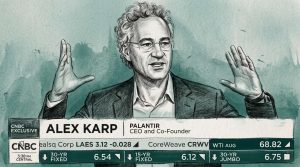
Alex Karp just told CNBC the AI industry is “effing insane.”
He’s right about one thing: AI isn’t overhyped, it’s mispriced. He’s also the guy selling you the fix....

Claude Fable 5: When Capability Meets Economics
Anthropic released Cloud Fable 5 with a paradox built in: safeguards sophisticated enough to let a mythosclass model...

Run Agentic AI Entirely on Your Mac—No Cloud, No Latency, No Privacy Tradeoffs
Apple’s MLX framework is mature enough now that you can run serious agentic AI workflows locally on Silicon...