Why Are These 19 AI Apps Still Free?
Free AI apps won't stay free forever
The explosion of AI tools over the past year has transformed how we work, create, and solve problems, bringing powerful capabilities previously reserved for tech giants directly to our browsers. As we navigate this golden era of AI accessibility, I've been tracking a curious phenomenon: despite the significant development and computing costs, many of the most capable AI applications remain completely free. But for how long?
In his recent analysis, Rob Lennon examines 19 remarkable AI tools that currently cost nothing to use, raising important questions about sustainability and future business models. These free offerings aren't merely basic utilities—they include sophisticated applications capable of replacing tasks that would traditionally require specialized skills or expensive software. However, the economics suggest this free-for-all period won't last indefinitely.
The current AI landscape reveals several key patterns:
-
Growth-stage prioritization drives most free AI offerings, with companies focused on rapid user acquisition before monetization. They're building massive user bases while refining their products, deliberately delaying revenue to establish market dominance.
-
Computing costs create an unavoidable financial reality for AI providers. Unlike traditional software, each AI interaction requires significant computational resources—making "forever free" models unsustainable for tools with substantial processing demands.
-
Differentiated value tiers are emerging as the most likely future business model, where basic capabilities remain free while premium features, higher usage limits, or enterprise integrations command subscription fees.
-
Data collection represents a hidden exchange in many "free" tools, where users effectively pay with their inputs and creations, which companies use to improve their models and build more competitive offerings.
-
Open-source alternatives increasingly challenge commercial AI tools, creating competitive pressure that may keep certain capabilities free longer than purely commercial incentives would suggest.
The most fascinating insight from this analysis isn't just which tools remain free, but what their approaches reveal about the evolving AI business ecosystem. Companies like OpenAI, Anthropic, and Google have initiated a strategic pattern: release powerful capabilities for free initially, build massive user bases, then gradually introduce tiered pricing as capabilities mature and dependencies form.
This pattern matters enormously for businesses integrating these tools into their workflows. The current moment represents a unique opportunity to experiment with AI capabilities at minimal financial risk, but also creates potential future vulnerabilities if critical processes become
More videos
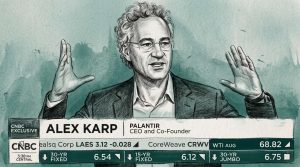
Alex Karp just told CNBC the AI industry is “effing insane.”
He’s right about one thing: AI isn’t overhyped, it’s mispriced. He’s also the guy selling you the fix....

Claude Fable 5: When Capability Meets Economics
Anthropic released Cloud Fable 5 with a paradox built in: safeguards sophisticated enough to let a mythosclass model...

Run Agentic AI Entirely on Your Mac—No Cloud, No Latency, No Privacy Tradeoffs
Apple’s MLX framework is mature enough now that you can run serious agentic AI workflows locally on Silicon...