
WH AI action plan will be a public-private partnership on a scale not seen before: Theresa Payton
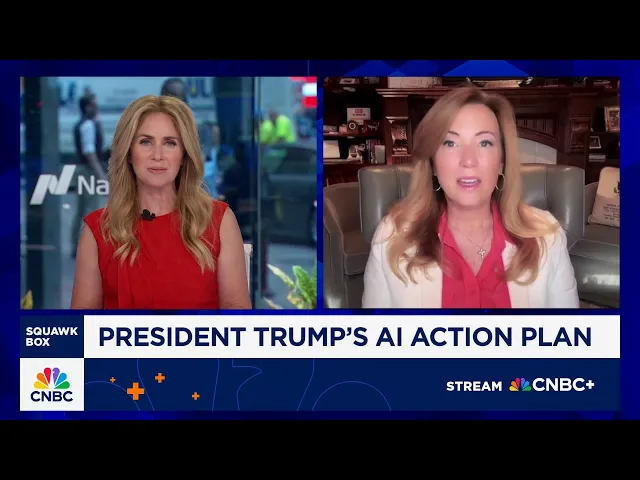
Biden's AI blueprint demands our attention
The White House is making unprecedented moves in artificial intelligence regulation, and business leaders should take immediate notice. President Biden's sweeping executive order on AI safety and security represents the most comprehensive government approach to managing AI risks we've seen to date. Combining mandatory safety testing, privacy protections, and civil rights guardrails, the administration is laying groundwork that will reshape how companies develop and deploy AI systems.
Key Points
-
The executive order establishes a public-private partnership framework that's unprecedented in scale, creating collaborative structures between government agencies, academic institutions, and industry leaders to address AI safety.
-
Critical infrastructure receives special focus, with new requirements for companies to report AI risks, demonstrate security measures, and comply with government-established safety standards.
-
Biden's administration is balancing innovation against security concerns, creating what officials call "guardrails" rather than hard restrictions that would impede technological progress.
-
Compliance timelines are surprisingly aggressive, with many requirements taking effect immediately and giving companies just 90-180 days to adapt to new standards.
The Most Critical Insight for Business Leaders
What stands out most about this executive order is its comprehensive scope coupled with rapid implementation timeframes. Unlike previous tech regulation efforts that progressed slowly through legislative channels, this executive action delivers immediate impact. Companies developing or deploying AI systems now face real, enforceable obligations with tight compliance windows.
This matters enormously because it fundamentally changes the risk calculation for businesses using AI. Until now, companies could operate in a relatively permissive regulatory environment, developing and deploying AI systems with limited government oversight. That era has ended. Organizations that haven't already established robust AI governance frameworks now face potential regulatory exposure that could impact everything from product development timelines to liability protection.
Going Beyond the Executive Order
The executive order, while comprehensive, leaves several critical questions unanswered. One significant gap involves cross-border AI governance. As American companies face these new restrictions, they'll increasingly compete against firms in regions with less stringent requirements. China, for example, continues aggressive AI development with different priorities around data collection and surveillance capabilities. This regulatory asymmetry could create competitive disadvantages for U.S. firms while failing to address global AI risks that transcend national boundaries.
Additionally, the order's focus on large language models and generative AI may not adequately address risks
Recent Videos
How To Earn MONEY With Images (No Bullsh*t)
Smart earnings from your image collection In today's digital economy, passive income streams have become increasingly accessible to creators with various skill sets. A recent YouTube video cuts through the hype to explore legitimate ways photographers, designers, and even casual smartphone users can monetize their image collections. The strategies outlined don't rely on unrealistic promises or complicated schemes—instead, they focus on established marketplaces with proven revenue potential for image creators. Key Points Stock photography platforms like Shutterstock, Adobe Stock, and Getty Images remain viable income sources when you understand their specific requirements and optimize your submissions accordingly. Specialized marketplaces focusing...
Oct 3, 2025New SHAPE SHIFTING AI Robot Is Freaking People Out
Liquid robots will change everything In the quiet labs of Carnegie Mellon University, scientists have created something that feels plucked from science fiction—a magnetic slime robot that can transform between liquid and solid states, slipping through tight spaces before reassembling on the other side. This technology, showcased in a recent YouTube video, represents a significant leap beyond traditional robotics into a realm where machines mimic not just animal movements, but their fundamental physical properties. While the internet might be buzzing with dystopian concerns about "shape-shifting terminators," the reality offers far more promising applications that could revolutionize medicine, rescue operations, and...
Oct 3, 2025How To Do Homeless AI Tiktok Trend (Tiktok Homeless AI Tutorial)
AI homeless trend raises ethical concerns In an era where social media trends evolve faster than we can comprehend them, TikTok's "homeless AI" trend has sparked both creative engagement and serious ethical questions. The trend, which involves using AI to transform ordinary photos into images depicting homelessness, has rapidly gained traction across the platform, with creators eagerly jumping on board to showcase their digital transformations. While the technical process is relatively straightforward, the implications of digitally "becoming homeless" for entertainment deserve careful consideration. The video tutorial provides a step-by-step guide on creating these AI-generated images, explaining how users can transform...