Trump just announced his AI plan. It’s weird.
Trump's bizarre AI agenda raises questions
Donald Trump recently unveiled his artificial intelligence policy vision, and the tech world can't stop buzzing about its peculiar approach to AI regulation. In a video addressing his supporters, the former president outlined a strategy that combines traditional Republican free-market principles with unexpected nationalist elements. This juxtaposition has created a fascinating case study in how political figures are attempting to position themselves on perhaps the most transformative technology of our era.
Key Points
- Trump's AI policy attempts to balance deregulation with national security concerns, proposing a "Manhattan Project" approach while simultaneously promising to slash regulations
- His plan specifically targets China, suggesting enhanced export controls on AI technologies while paradoxically promoting American AI innovation
- The proposal includes unusual elements like eliminating Section 230 protections for AI companies and creating a government-run verification system for AI-generated content
The Nationalist Contradiction
The most revealing aspect of Trump's AI agenda is its fundamental contradiction: he simultaneously champions a hands-off regulatory approach while advocating for significant government intervention. This tension reflects a broader struggle within conservative political circles to reconcile free-market principles with growing concerns about national security and technological sovereignty.
Trump's call for a "Manhattan Project for AI" directly conflicts with his promise to slash regulations. The original Manhattan Project was arguably one of the most tightly controlled and heavily regulated government initiatives in American history. It represented the exact opposite of deregulation—it was centralized planning at an unprecedented scale. This contradiction exposes a growing reality in technology policy: the traditional partisan dividing lines on regulation are blurring as technologies like AI raise complex questions about security, competition, and American technological leadership.
Beyond the Political Theater
What's particularly interesting about Trump's AI policy is what it signals about the broader politicization of artificial intelligence. While previous technological revolutions—from personal computing to social media—eventually became political issues, AI is entering the political arena with unprecedented speed.
Consider the contrast with the early internet. In the 1990s, politicians on both sides of the aisle largely approached the internet with a light-touch regulatory philosophy. The 1996 Telecommunications Act and its famous Section 230 provision passed with broad bipartisan support. It took nearly two decades for the internet to become a deeply partisan issue.
AI, by contrast, is being politicized before it has
More videos
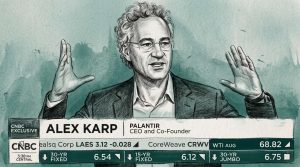
Alex Karp just told CNBC the AI industry is “effing insane.”
He’s right about one thing: AI isn’t overhyped, it’s mispriced. He’s also the guy selling you the fix....

Claude Fable 5: When Capability Meets Economics
Anthropic released Cloud Fable 5 with a paradox built in: safeguards sophisticated enough to let a mythosclass model...
Run Agentic AI Entirely on Your Mac—No Cloud, No Latency, No Privacy Tradeoffs
Apple’s MLX framework is mature enough now that you can run serious agentic AI workflows locally on Silicon...