tldraw.computer
tldraw.computer: the canvas of endless possibilities
In an era where digital collaboration tools seem to multiply by the day, Steve Ruiz's presentation on tldraw.computer reveals something refreshingly different – a canvas-based interface that challenges our assumptions about what computers can do. As demonstrated in his recent talk, Ruiz isn't just building another drawing app; he's reimagining how we interact with computing environments altogether. His whiteboard-centric approach offers a glimpse into a world where rigid application boundaries dissolve in favor of free-form thinking and creation.
Key Points
-
tldraw fundamentally rethinks computing interfaces by treating the infinite canvas as the primary metaphor, rather than documents or applications, allowing for more natural information organization and manipulation.
-
The system introduces "frames" as flexible containers that can host different computational environments – from code editors to web browsers – while maintaining the fluidity and spatial relationships of the canvas.
-
Complex interactions are simplified through clever design choices, such as using paper-like affordances to create intuitive user experiences without sacrificing computational power.
Why This Matters More Than You Think
The most compelling aspect of Ruiz's work is how it reconceptualizes the relationship between humans and computers. For decades, we've accepted the application-centric model as the only way to interact with digital tools, forcing our thinking into predefined containers. tldraw flips this paradigm by starting with the blank canvas – the digital equivalent of unlimited thinking space.
This shift matters profoundly in today's business context. Organizations increasingly recognize that innovation doesn't happen in silos. When marketing needs to collaborate with engineering, or sales needs to work with product development, the traditional boundaries between specialized software tools become barriers rather than enablers. By providing a unified canvas where different computational tools can coexist and interact, tldraw offers a solution to the fragmentation that plagues modern workflows.
Consider how the average knowledge worker toggles between 9-15 different applications daily. Each switch represents not just lost time but a mental context shift that fragments thinking. A canvas-based approach, where different tools exist in spatial relationship to each other, mirrors how we naturally organize information in the physical world – and potentially restores some of the cognitive coherence we've sacrificed to digital efficiency.
Beyond the Demo: Where
More videos
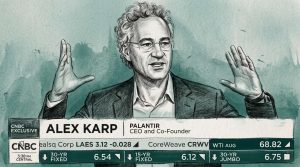
Alex Karp just told CNBC the AI industry is “effing insane.”
He’s right about one thing: AI isn’t overhyped, it’s mispriced. He’s also the guy selling you the fix....

Claude Fable 5: When Capability Meets Economics
Anthropic released Cloud Fable 5 with a paradox built in: safeguards sophisticated enough to let a mythosclass model...
Run Agentic AI Entirely on Your Mac—No Cloud, No Latency, No Privacy Tradeoffs
Apple’s MLX framework is mature enough now that you can run serious agentic AI workflows locally on Silicon...