Tesla Earnings Reaction
Tesla's bold bet on driving itself forward
In the wake of Tesla's recent earnings call, the company has seen its stock surge about 7%, despite what many consider a lackluster quarterly performance. The fascinating juxtaposition of underwhelming financial results against optimistic future guidance illuminates Tesla's pivot from being primarily an electric vehicle manufacturer to positioning itself as an AI and robotics company that happens to make cars.
Key developments from Tesla's earnings call
-
Focus shift to autonomy: Elon Musk's commentary revealed an unwavering focus on self-driving capabilities, with plans to launch a robo-taxi service in Austin this June with 10-20 Model Y vehicles (likely with safety drivers initially).
-
Production pragmatism: Tesla appears to be pivoting toward maximizing existing production lines rather than introducing entirely new models, suggesting cheaper variants of current vehicles may be coming rather than completely new designs.
-
Robot ambitions: The company showcased its next-generation humanoid robot but set expectations that significant commercial deployment won't happen until 2026-2027, with business customers coming first.
-
Elon's reduced role at X/Twitter: Musk reaffirmed he would step back from his involvement with X (formerly Twitter) starting in May when his 130-day special employee status expires—news Wall Street clearly welcomed.
The self-driving endgame
The most revealing insight from the earnings call wasn't about quarterly numbers but Tesla's long-term strategy. When questioned why Tesla isn't selling more vehicles despite their advantages over traditional cars, Musk's response was telling: "eventually people won't buy any cars." This seemingly odd response perfectly encapsulates Tesla's vision—they're not building a better car company; they're creating an autonomous transportation network.
This strategy explains why Tesla isn't panicking about short-term delivery slowdowns. The company is playing a different game altogether. Each vehicle deployed serves as both a revenue generator today and a potential robo-taxi tomorrow. The real value isn't in manufacturing margins but in creating the largest fleet of updatable, AI-capable vehicles ever deployed.
What makes this particularly significant is the moat Tesla has established. While competitors like Waymo operate geofenced services in limited areas using specialized vehicles with expensive sensor suites, Tesla's approach allows any of
More videos
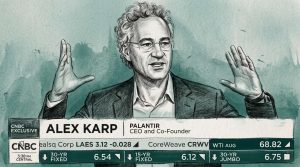
Alex Karp just told CNBC the AI industry is “effing insane.”
He’s right about one thing: AI isn’t overhyped, it’s mispriced. He’s also the guy selling you the fix....

Claude Fable 5: When Capability Meets Economics
Anthropic released Cloud Fable 5 with a paradox built in: safeguards sophisticated enough to let a mythosclass model...

Run Agentic AI Entirely on Your Mac—No Cloud, No Latency, No Privacy Tradeoffs
Apple’s MLX framework is mature enough now that you can run serious agentic AI workflows locally on Silicon...