Nvidia CEO on Tariffs, AI Chips, China Competition
Chip boss warns China closing AI gap
In a taut exchange on the sidelines of what appears to be a high-level meeting with the administration, Nvidia CEO Jensen Huang delivered a sobering assessment of global AI competition that should alarm American tech strategists. While his company currently leads the world in AI chip production, Huang's candid remarks about China's capabilities reveal a race much tighter than many Western observers acknowledge — with profound implications for national security and economic leadership.
Key insights from Huang's comments:
- Nvidia's "$500 billion" US investment represents a complex ecosystem requiring extensive partnerships and factory construction, not merely a single company's commitment
- Huang diplomatically but firmly urged for policies that "accelerate the development of artificial intelligence" and "the diffusion of American technology around the world"
- He explicitly warned that "China is not behind anybody" and is "right behind us" in AI capability, calling it "an infinite race" with a competitor possessing "great will" and "great technical capabilities"
The five-alarm fire most missed
The most critical revelation in Huang's comments wasn't about tariffs or manufacturing plans, but his stark assessment that China has essentially caught up in the AI race. This directly contradicts the prevailing narrative that American companies maintain a comfortable lead in advanced computing.
This matters tremendously because AI leadership translates directly to economic and national security advantages. When Huang notes that "50% of the world's AI researchers are Chinese," he's highlighting a structural advantage that compounds over time. While semiconductor export controls have temporarily hindered China's hardware capabilities, these restrictions become increasingly ineffective as domestic alternatives develop. The competition isn't about maintaining a lead—it's about preventing a crossover where China establishes sustainable advantages across the AI stack.
What Huang didn't say, but business leaders must understand
The tension between Nvidia's global business interests and US national security policy remains unresolved. While Huang carefully avoided directly criticizing export controls, his company faces a profound dilemma: regulatory restrictions limit access to the enormous Chinese market while Chinese competitors like Huawei rapidly advance their capabilities. This creates potential for a lose-lose scenario where American companies sacrifice revenue without effectively containing China's technological advancement.
We've seen this pattern before in other technologies. When the US restricted satellite technology exports in the 1990s
More videos
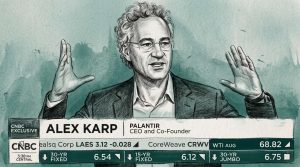
Alex Karp just told CNBC the AI industry is “effing insane.”
He’s right about one thing: AI isn’t overhyped, it’s mispriced. He’s also the guy selling you the fix....

Claude Fable 5: When Capability Meets Economics
Anthropic released Cloud Fable 5 with a paradox built in: safeguards sophisticated enough to let a mythosclass model...

Run Agentic AI Entirely on Your Mac—No Cloud, No Latency, No Privacy Tradeoffs
Apple’s MLX framework is mature enough now that you can run serious agentic AI workflows locally on Silicon...