
MCP is all you need
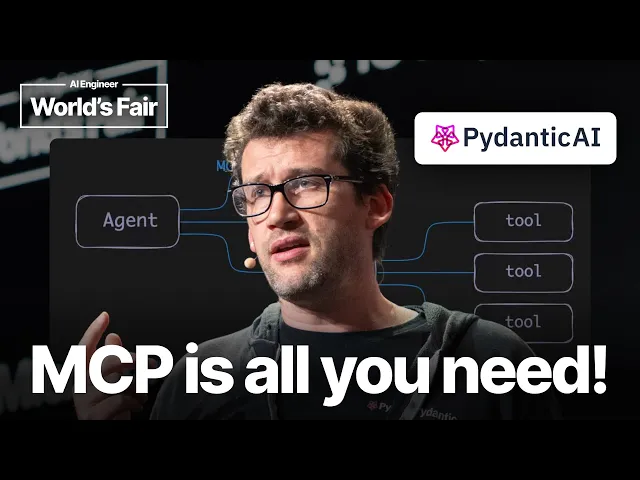
Pydantic MCP unlocks Python data validation power
Pydantic's new Model Composition Protocol might just revolutionize how Python developers handle data validation. In a recent tech talk, Samuel Colvin—the creator of Pydantic—introduced MCP, potentially the most significant enhancement to the popular data validation library since its inception. For developers who regularly wrangle with complex data structures, this seemingly technical update offers surprising flexibility that could dramatically simplify codebases across numerous Python projects.
Key points from Samuel's presentation:
- MCP (Model Composition Protocol) introduces a new approach to composing Pydantic models, allowing for more flexible and powerful data validation patterns beyond inheritance
- The protocol addresses limitations in Pydantic V1's model composition, providing better support for complex nested data validation scenarios
- MCP enables working with immutable data structures while maintaining type validation, substantially improving both correctness and developer experience
Why MCP matters more than you might think
The most insightful aspect of Colvin's presentation is how MCP fundamentally changes Pydantic's approach to data validation. Rather than forcing developers to structure their validation logic around class inheritance—which can quickly become unwieldy—MCP allows for more composable, flexible patterns that better represent real-world data.
This shift matters because data validation sits at the heart of modern application development. Whether you're building APIs, processing user inputs, or integrating with external services, the ability to reliably validate, transform, and manipulate structured data determines both your application's reliability and your development velocity. By making these patterns more intuitive and maintainable, MCP could significantly reduce the complexity tax that many Python projects pay when dealing with complex data structures.
Beyond the presentation: Practical applications
What Samuel didn't explicitly cover is how transformative MCP could be for microservice architectures. In distributed systems, where data constantly flows between services, robust validation becomes critical. Previously, teams might define similar but slightly different validation models across services, leading to inconsistencies and bugs. With MCP, a shared validation library becomes more practical—models can be composed and customized per service without duplicating core logic.
Consider a financial services application that processes transaction data. The core transaction model might include dozens of fields, but different microservices need different subsets with additional validation rules. Before M
Recent Videos
Andrej Karpathy on the Decade of Agents, the Limits of RL, and Why Education Is His Next Mission
A summary of key takeaways from Andrej Karpathy's conversation with Dwarkesh Patel In a wide-ranging conversation with Dwarkesh Patel, Andrej Karpathy — former head of AI at Tesla, founding member of OpenAI, and creator of some of the most popular AI educational content on the internet — shared his views on where AI is headed, what's still broken, and why he's now pouring his energy into education. Here are the key takeaways. "It's the Decade of Agents, Not the Year of Agents" Karpathy's now-famous quote is a direct pushback on industry hype. Early agents like Claude Code and Codex are...
Oct 6, 2025How To Earn MONEY With Images (No Bullsh*t)
Smart earnings from your image collection In today's digital economy, passive income streams have become increasingly accessible to creators with various skill sets. A recent YouTube video cuts through the hype to explore legitimate ways photographers, designers, and even casual smartphone users can monetize their image collections. The strategies outlined don't rely on unrealistic promises or complicated schemes—instead, they focus on established marketplaces with proven revenue potential for image creators. Key Points Stock photography platforms like Shutterstock, Adobe Stock, and Getty Images remain viable income sources when you understand their specific requirements and optimize your submissions accordingly. Specialized marketplaces focusing...
Oct 3, 2025New SHAPE SHIFTING AI Robot Is Freaking People Out
Liquid robots will change everything In the quiet labs of Carnegie Mellon University, scientists have created something that feels plucked from science fiction—a magnetic slime robot that can transform between liquid and solid states, slipping through tight spaces before reassembling on the other side. This technology, showcased in a recent YouTube video, represents a significant leap beyond traditional robotics into a realm where machines mimic not just animal movements, but their fundamental physical properties. While the internet might be buzzing with dystopian concerns about "shape-shifting terminators," the reality offers far more promising applications that could revolutionize medicine, rescue operations, and...