
Chelsea Finn: Building Robots That Can Do Anything
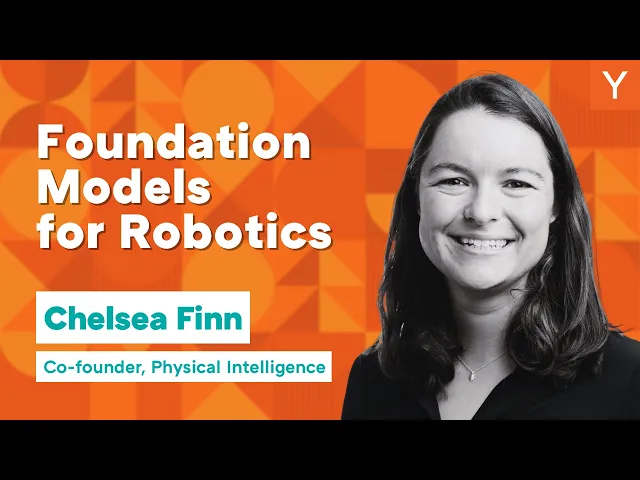
AI systems revolutionize robot learning capabilities
In the rapidly evolving landscape of robotics and artificial intelligence, the quest to create machines that can learn from experience—rather than explicit programming—represents a profound technological shift. Chelsea Finn, an influential researcher in the field, recently shared fascinating insights into how modern AI systems are empowering robots to acquire skills through observation and practice, much like humans do. This approach, centered around the concept of machine learning, promises to dramatically expand what robots can accomplish in real-world settings.
Key Points:
- Machine learning enables robots to acquire skills through experience and observation rather than requiring explicit programming for each task
- Large language models (LLMs) now function as an interface between humans and robots, translating natural language instructions into actionable robotic behaviors
- Generalization capabilities allow robots to apply learned knowledge to new situations, bridging the gap between narrow task execution and more flexible, adaptable performance
The Generalization Revolution
The most compelling aspect of Finn's perspective centers on how machine learning addresses the fundamental limitation of traditional robotics: the inability to generalize knowledge. Historically, robots excelled at repetitive, precisely defined tasks but struggled with adaptation. Modern approaches have transformed this paradigm by teaching robots to extract underlying patterns from their experiences.
This shift matters tremendously because it addresses the core challenge that has limited robotic deployment outside of controlled manufacturing environments. When robots can apply lessons from one context to another—recognizing that picking up a stuffed animal uses similar principles to picking up a coffee mug—they become exponentially more valuable in dynamic settings like homes, hospitals, and unstructured workplaces.
The industrial implications are substantial. Companies investing in next-generation robotics no longer need to choose between highly specialized machines that perform narrow tasks perfectly or accepting significant limitations in more flexible systems. Instead, these learning-based approaches promise both adaptability and competence, potentially unlocking new applications across sectors from healthcare to retail to logistics.
Beyond the Video: Real-World Implementations
While Finn focuses primarily on research directions, several companies are already commercializing these principles with remarkable results. Covariant, a Berkeley-based startup, has deployed vision-based robotic systems in warehouse environments that can handle thousands of different objects without explicit programming for each. Their systems demonstrate precisely the kind of generalization Finn describes—learning to handle new
Recent Videos
Andrej Karpathy on the Decade of Agents, the Limits of RL, and Why Education Is His Next Mission
A summary of key takeaways from Andrej Karpathy's conversation with Dwarkesh Patel In a wide-ranging conversation with Dwarkesh Patel, Andrej Karpathy — former head of AI at Tesla, founding member of OpenAI, and creator of some of the most popular AI educational content on the internet — shared his views on where AI is headed, what's still broken, and why he's now pouring his energy into education. Here are the key takeaways. "It's the Decade of Agents, Not the Year of Agents" Karpathy's now-famous quote is a direct pushback on industry hype. Early agents like Claude Code and Codex are...
Oct 6, 2025How To Earn MONEY With Images (No Bullsh*t)
Smart earnings from your image collection In today's digital economy, passive income streams have become increasingly accessible to creators with various skill sets. A recent YouTube video cuts through the hype to explore legitimate ways photographers, designers, and even casual smartphone users can monetize their image collections. The strategies outlined don't rely on unrealistic promises or complicated schemes—instead, they focus on established marketplaces with proven revenue potential for image creators. Key Points Stock photography platforms like Shutterstock, Adobe Stock, and Getty Images remain viable income sources when you understand their specific requirements and optimize your submissions accordingly. Specialized marketplaces focusing...
Oct 3, 2025New SHAPE SHIFTING AI Robot Is Freaking People Out
Liquid robots will change everything In the quiet labs of Carnegie Mellon University, scientists have created something that feels plucked from science fiction—a magnetic slime robot that can transform between liquid and solid states, slipping through tight spaces before reassembling on the other side. This technology, showcased in a recent YouTube video, represents a significant leap beyond traditional robotics into a realm where machines mimic not just animal movements, but their fundamental physical properties. While the internet might be buzzing with dystopian concerns about "shape-shifting terminators," the reality offers far more promising applications that could revolutionize medicine, rescue operations, and...