AI, layoff fears spark workplace insecurity
Job security in the AI era
In a world rapidly transformed by artificial intelligence, the modern workplace is experiencing unprecedented shifts in security, productivity expectations, and employee well-being. The recent CBS Sunday Morning segment featuring correspondent David Pogue delves into the growing tensions between technological advancement and job security, highlighting how AI's rapid integration into workplace tools is creating a perfect storm of anxiety and uncertainty among workers across various industries.
AI's infiltration into the workplace isn't merely changing how we work—it's fundamentally altering if we work. As companies rush to adopt tools that promise greater efficiency and cost savings, employees are left wondering whether their roles will survive the next wave of technological disruption. This anxiety isn't unfounded, as experts and everyday workers alike grapple with the dual realities of AI's potential benefits and its threat to traditional employment structures.
Key insights from the segment:
- The convergence of post-pandemic economic uncertainty, high-profile tech layoffs, and rapidly advancing AI capabilities has created unprecedented workplace anxiety about job security
- Productivity pressures have intensified as employers increasingly use surveillance technologies and AI to monitor and evaluate employee performance
- Worker burnout has reached crisis levels, with 43% of desk workers reporting feeling exhausted and 46% considering job changes due to workplace stress
The psychological toll of technological disruption
Perhaps the most compelling takeaway from Pogue's reporting is the profound psychological impact that technological uncertainty is having on workers. The segment reveals a workforce caught in a paradox: pressured to embrace AI tools that might ultimately replace them, while simultaneously expected to demonstrate their irreplaceable human value. This tension manifests as what psychologists call "anticipatory anxiety"—the stress of constantly wondering if and when your job might disappear.
This matters tremendously in our current economic context. Unlike previous technological revolutions that primarily affected manual labor, AI's capabilities now extend into knowledge work domains previously considered safe from automation. Fields like law, medicine, finance, and creative industries are experiencing their first real taste of technological job insecurity. The result is a fundamental shift in the social contract between employers and employees, with loyalty and institutional knowledge becoming increasingly devalued in favor of adaptability and technological proficiency.
Beyond the segment: The hidden costs of perpetual insecurity
What the CBS segment doesn't fully explore is how this climate of insecurity creates substantial hidden
More videos
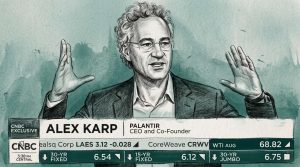
Alex Karp just told CNBC the AI industry is “effing insane.”
He’s right about one thing: AI isn’t overhyped, it’s mispriced. He’s also the guy selling you the fix....

Claude Fable 5: When Capability Meets Economics
Anthropic released Cloud Fable 5 with a paradox built in: safeguards sophisticated enough to let a mythosclass model...

Run Agentic AI Entirely on Your Mac—No Cloud, No Latency, No Privacy Tradeoffs
Apple’s MLX framework is mature enough now that you can run serious agentic AI workflows locally on Silicon...