Open Source Software and the Teams Behind It Powered the Last 20 Years of Innovation. Don’t Let AI Labs Block the Next 20 Years.

Open source and open-weight AI is worth protecting and worth letting grow, because the last 20 years of computing already ran this experiment once, and the results are sitting under nearly every piece of software in the world. Meanwhile, the loudest voice pushing for the kind of regulation that would slow open AI down is a company that is, at the same time, staffing up its policy operation and positioning itself as the one lab responsible enough to be trusted with the technology unsupervised. Those two facts sitting next to each other are worth examining directly.
What we already know because we already lived it
Linux runs roughly 90% of public cloud workloads today. OpenSSL, the library that encrypts a huge share of internet traffic, secures an estimated 95% of websites using TLS, on hardware ranging from servers to game consoles to smart appliances, and it was still built and maintained for years by a tiny, underfunded volunteer team. Kubernetes, born inside Google before being open-sourced in 2014, became the standard nearly every company now uses to run software at scale, with an entire ecosystem of other open projects built on top of it. MySQL powered a generation of the web’s databases for free, at a time when a commercial database license could cost more than a startup’s entire seed round. None of these were built inside a single company’s walls. They were built because people were allowed to.
The economics of that openness have been measured, not just asserted. Harvard Business School research, cited by Ubuntu, puts the value of open source software to the global economy at $8.8 trillion, roughly 3.5 times what companies currently spend on software combined. A16z’s policy team found that 98% of codebases now contain open source software. If you tried to rebuild the software layer underneath the modern internet from scratch, privately, licensed, closed, there is no serious argument that it would have happened on anything like this timeline, at anything like this scale, or that it would be running inside 98% of what gets built today.
Academic research depended on that openness even more directly than industry did. Commercial research software commonly requires per-seat licenses that scale straight past what a university department can afford, and the market for specialized scientific software is usually too small to be commercially profitable in the first place, which is exactly why so much of it only exists because it was built open. Take that option away and you’re cutting off the tool a lab needs to exist at all, not just raising its price. That’s the same dynamic now playing out with AI: whoever controls the terms of access controls who gets to do the research.
The company arguing hardest against this pattern is also the one building a policy operation
Anthropic’s own published policy positions call for mandatory publication of “catastrophic risk evaluations,” independent third-party safety testing, and “strict export controls on advanced chips and semiconductor manufacturing equipment.” Each of those asks sounds reasonable in isolation. Together, they describe a compliance regime that only a company with Anthropic’s resources could fully meet, which is exactly the criticism now following the company in print. Wired’s own headline on the subject put it bluntly: “Anthropic Thinks Its Own Success Is Key to Making AI Safe.”
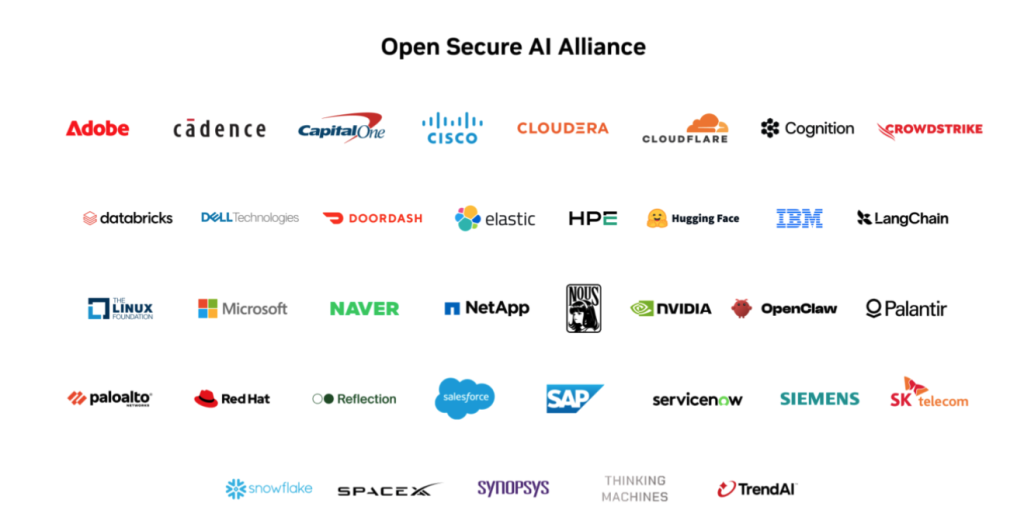
The pattern shows up in the data, not just the commentary. When the “Open Weights and American AI Leadership” letter launched on July 24 with 25 signatories, Anthropic didn’t sign. When the coalition grew to 35 signatories within a day, Anthropic still didn’t sign. By July 26 it had grown to 50, with both Google and OpenAI joining after initially sitting out. Anthropic and Amazon remain the two major holdouts. Dario Amodei has been direct about why, publicly calling open source AI “a red herring” in the policy debate. Days later, when Nvidia launched an entirely separate coalition, the Open Secure AI Alliance, nearly 40 companies including Microsoft, IBM, SpaceX, CrowdStrike, and Cisco, Anthropic was absent from that one too.
At the same time, Anthropic’s own hiring and spending point the same direction. Job postings from just the past two weeks include a Policy Partnerships & Convenings Lead for its Central Policy team, a Regional State and Local Affairs Lead for the Southern states, a Data Scientist for Policy, and multiple Applied AI Architect roles built specifically around state and local government accounts. The money backs up the hiring. Per Axios, Anthropic spent more on federal lobbying in the first half of 2026 alone, over $3.5 million, than it spent in all of 2025 combined ($3.1 million), including a record $1.97 million in Q2 focused on export controls, cybersecurity, and AI safety standards, plus roughly $300,000 more in California state lobbying on top of that. In February 2026, Anthropic also donated $20 million to Public First Action, a political group it describes as backing candidates who support AI safeguards. A company doesn’t build a policy and lobbying operation this specific by accident. Whatever the intent behind it, the effect of Anthropic’s stated positions, if adopted as policy, would fall hardest on exactly the open and smaller players who can’t afford a compliance department, or a lobbying budget, anywhere close to that size.
What the people who’ve watched this pattern before are saying
This isn’t the first time the tech industry has argued about whether open collaboration or closed control wins. Andreessen Horowitz general partner Ben Horowitz spent a full episode of the a16z Show making the case that the US already lost the early rounds of this exact fight with China on strategy, not technology: while American labs treated their models like a closed Manhattan Project, Chinese developers built and released DeepSeek openly, and it ended up running inside American company and university labs anyway, because openness spreads and secrecy doesn’t stop that spread, it just decides who controls the terms.
Steven Sinofsky, who spent years running Windows at Microsoft before joining a16z, has lived the other side of that argument personally. He’s written publicly about being told, inside Microsoft, that open source was effectively “communist,” a framing from a specific moment twenty-five years ago that hasn’t aged well now that open source underpins nearly all of modern computing, Microsoft’s own products included. The lesson isn’t subtle: the same argument being made against open AI today, that it’s too dangerous, too uncontrolled, too irresponsible to release, was made against open software a generation ago, and it was wrong.
A16z’s own policy research backs the strategic case with numbers. Roughly 80% of developers currently building on open source AI tools are using Chinese-built tools, and Alibaba’s Qwen has passed 700 million downloads, making it the most widely adopted open AI system in the world. The same research found that switching from closed to open models in 2025 alone would have cut average prices by more than 70%, worth an estimated $25 billion in savings. That’s money already left on the table, because openness was treated as a risk instead of infrastructure.
The industry is already voting with its actions
Jensen Huang had never posted on X, not once, in all the years he’s run Nvidia into being one of the most valuable companies in the world. When he finally did, his first post was the open-weights letter. Three days later, after an autonomous AI agent breached Hugging Face and a closed American model refused to help investigate its own attack logs while an open Chinese model completed the forensics, Huang moved again: “Defenders need a frontier AI ecosystem, the best open and closed models, force-multiplied by a global community,” he wrote, announcing the Open Secure AI Alliance. “During the Hugging Face incident, closed AI blocked essential forensics. An open-weight frontier model helped contain the intrusion. That’s why we created the Open Secure AI Alliance.”
That’s the whole argument in one incident. A closed model, built by a lab that argues closed and controlled is safer, failed the exact test that mattered, and an open model succeeded where it counted. Openness built the last 20 years of computing. Days ago, it was the thing that worked when a real system was under attack.
By Anthony Batt – 20+ years building software and digital media products at scale. Podcasting host at Future-Proof Podcast by CO/AI.
More like this
Eiso Kant: The AI Founder Who Lost a $2 Billion Round, Then Shipped Anyway
The setback nobody’s talking about, including him. In October 2025, Poolside announced Project Horizon: a 2-gigawatt AI data...

The Real AI Race Isn’t Model vs. Model Anymore. Here’s Where Poolside Actually Fits.
The closed frontier is down to two names, and one of them just changed Start with the giants,...

The Week Kimi K3 Broke the Internet: Inside Moonshot AI’s Biggest Launch Yet
On July 17, Chinese AI lab Moonshot AI released Kimi K3, and by every measure available, the internet...