
Seedance Is Quietly Winning AI Video, and Nobody’s Talking About It the Way They Should Be

Kimi K3 got the headlines this month, chip-stock swings, a Musk exchange, a suspended waitlist. But scroll past the AI-lab drama and a quieter story has been playing out in parallel: ByteDance’s Seedance has become the default video-generation tool for a huge slice of working AI creators, and the last 30 days show exactly why.
What actually shipped
ByteDance unveiled Seedance 2.5 on stage at its Volcano Engine FORCE conference, and the reveal itself became a talking point. Per @ZentrixHQ, the keynote opened with a staged “glitch”, the demo film appeared to break apart on screen, characters flattening into paper cutouts, before the “failure” turned out to be the setup for the new model’s reveal. Theatrical, but it worked: the clip circulated widely as shorthand for “ByteDance just one-upped everyone.”
The actual upgrade is substantial. Seedance 2.0 capped a usable single take around 15 seconds, past that you were stitching multiple clips together and hoping lighting, character, and motion didn’t drift across the seams. Seedance 2.5 generates a native 30-second single-shot clip, no stitching, and Dreamina’s “Ultra-Long” beta mode pushes that to a full 180 seconds in one prompt. It also jumped to native 4K, added native synchronized audio baked into generation rather than layered after, and expanded reference inputs from roughly 12 assets to up to 50 images, video clips, and audio files per generation. The API opened for commercial use on July 16, and ByteDance pushed early global access outside China through its Jimeng app, dropping the 30-180 second capability internationally within days of the China launch.
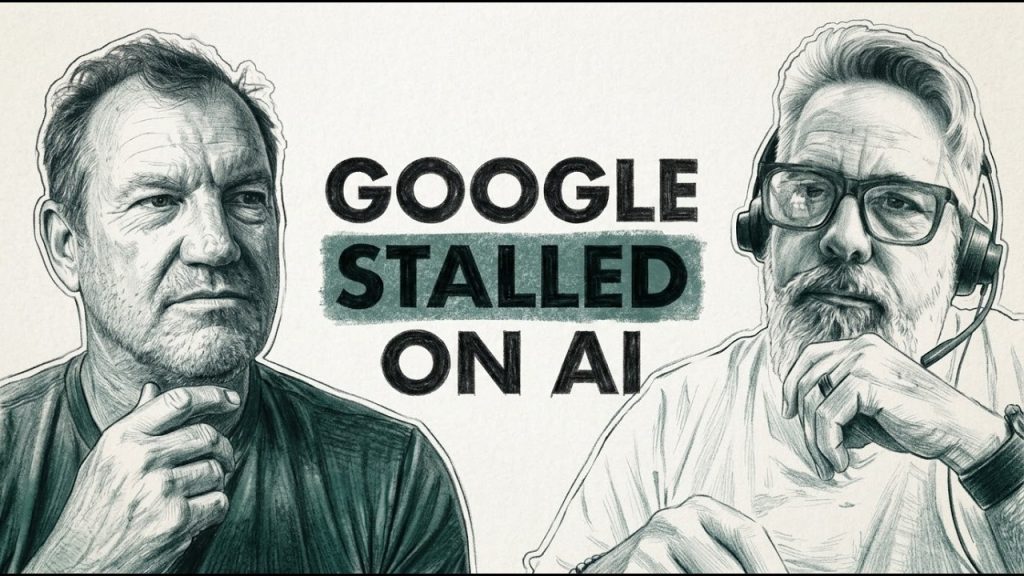
Ep 14 – Google Is Stalling, Elon Bought Cursor for $60B, and AI Still Has No User Manual
Google sheds $200B and loses top talent while Elon buys Cursor to control the developer toll road. Harry and Anthony break down the reality of enterprise AI, on-prem security, and why the best tech doesn’t always win.
One real, practical complaint from Seedance 2.0 carried into how 2.5 got designed: regenerating an entire video over one small detail, a wrong facial expression, one bad frame, meant starting over from scratch. Seedance 2.5’s targeted, localized editing directly answers that: tell the model to change one specific detail, an expression, a color, an object, without touching the rest of the shot.
What people are actually building with it
This is where Seedance’s month gets interesting, because the evidence isn’t benchmark screenshots, it’s finished work.
Neill Blomkamp, the director behind District 9, Chappie, and Gran Turismo, made a film with Seedance 2.0 and used it to launch his own AI film studio, Barley Studios, following the same model as his earlier Oats Studios. It landed exactly where you’d expect: genuine praise mixed with sharp criticism on both r/aiwars and r/DefendingAIArt, split almost evenly between “impressive for a new art form” and “objectively the worst thing he’s put out.”
A Japanese animator working under the handle Tetsurou, with over a decade in the anime industry including work on Trigun Stampede and Trigun Stargaze, used Seedance to render anime output from simple 3D models. The post pulled 2,817 upvotes and reopened the industry’s running debate about AI “intentionality”: one top comment called it “better than normal CGI in anime,” another said the artistic-legitimacy question is “just gatekeeping.”
On the indie side, a creator posting as PJ Ace has been building a sci-fi universe called Nexus almost entirely in Seedance, episode two cost roughly $6,000 in 4K generation credits and was made with a small team in six days, with a full feature film planned for next year. Elsewhere on r/aivideo, someone combined real drone footage with Seedance to generate “increasingly ludicrous tsunamis hitting my hometown,” a post that pulled 1,850 upvotes largely because, as one commenter put it, “imagine the amount of manual CGI work that these multiple videos would’ve taken to make.”
There’s enough of this activity now that dedicated communities have formed around it, r/Seedance_AI and r/Seedance_v2 are both active, which is a meaningfully different signal than a tool people just talk about, it’s one they organize around.
The commercial and competitive picture
BytePlus, ByteDance’s enterprise arm, ran an official brand campaign with football legend Michael Owen, recreating highlights from his career entirely through Seedance 2.5-generated video, an explicit signal ByteDance is pitching this past hobbyist creators and into brand marketing budgets. Third-party products are already building on top of it too: Gigabee shipped a feature called Bee Reel powered directly by the bytedance/seedance-1-lite model, turning any chat prompt into video without a separate app or subscription.
Zoomed out, one roundup of 2026’s most consequential AI releases put it bluntly: “ByteDance dropped Seedance and owned video generation”, in the same breath as GLM-5.2, Grok 4.5, and Kimi K3. Another account tracking the broader Chinese AI wave was more specific about reach: “Seedance 2.0 flooded TikTok and Instagram. Almost every viral AI video right now is made with it.” That’s a claim worth treating skeptically on its face, but it matches what shows up organically across Reddit, YouTube, and X this month: Seedance isn’t showing up as a benchmark leaderboard entry, it’s showing up as the tool underneath other people’s finished work.
YouTube coverage backs that up in volume. A 330,000-view review walked through Seedance 2.0 inside Dreamina end to end. Higgsfield AI’s tutorials on building full short films with Seedance 4K pulled 108,000 and 124,000 views respectively. Theoretically Media, a channel that tracks the AI creative-tools space closely, called it flatly: “Seedance 2.5 is a GAMECHANGER.”
The honest caveats
Cost keeps coming up as the real ceiling. 4K generation is expensive enough that creators are explicit about it, PJ Ace’s $6,000-per-episode number isn’t an outlier complaint, it’s a plainly stated budget line. And Seedance’s moment is arriving inside an unusually crowded week for Chinese AI releases, Kimi K3, Alibaba’s Qwen-Image 3.0, and GLM-5.2 all shipped within days of each other, which means Seedance is competing for attention even within its own country’s AI wave, not just against Sora, Veo, and Kling.
Where this leaves things
Kimi K3 will keep dominating the AI-discourse headlines because it’s a frontier language model going up against Claude and GPT directly, that’s an easier story to argue about. But Seedance’s last 30 days tell a different kind of story: a working director launching a studio around it, an anime veteran using it professionally, an indie creator building a universe episode by episode, and enough grassroots adoption to spawn its own subreddits. That’s not hype cycle behavior. That’s a tool people have started building careers on.
By Anthony Batt — 20+ years building software and digital media products at scale. Podcasting host at Future-Proof Podcast by CO/AI.
More like this

I Didn’t Think Much of Mira Murati Leaving OpenAI. I Was Wrong.
When Mira Murati left OpenAI in 2024, I’ll be honest, I didn’t think much of it. Executive departures...

The Real Cost of the AI Data Center Boom
Four Companies Are Spending $700 Billion This Year on AI Infrastructure — More Than the Entire Economy of...

Palantir’s Alex Karp Just Called the AI Industry “Effing Insane” Here’s What He’s Really Selling You
Alex Karp Just Told You Not To Trust Your AI Vendor. He’s Also Selling You the Fix. Palantir’s...